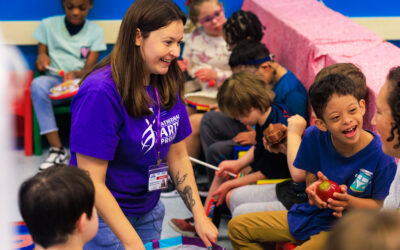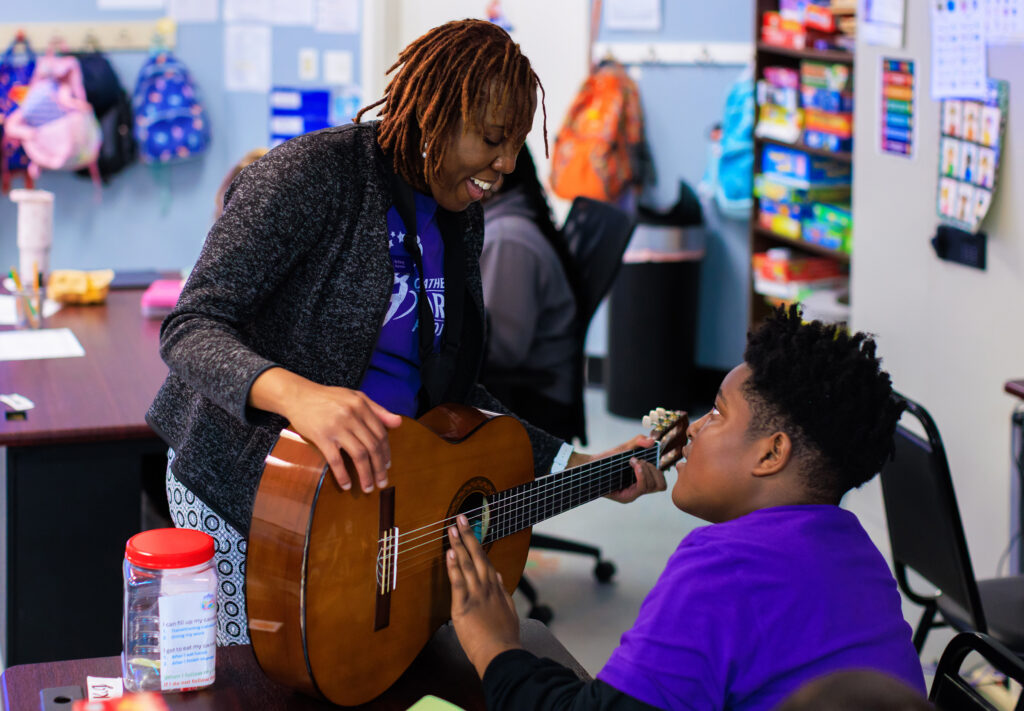
CAP music therapist Brittany Harmon working with a student at Growing Together Behavioral Center | Photo by Toni Smailagic of Cre8Jax
Music therapy is a powerful tool for helping teens and young adults with disabilities develop the essential soft skills crucial for success in the workplace and community. CAP’s Building Better Job Skills Through Music Therapy program at PossAbilities Plus in Atlantic Beach exemplifies this approach, designed to foster executive function, communication, peer relationships and job-related competencies.
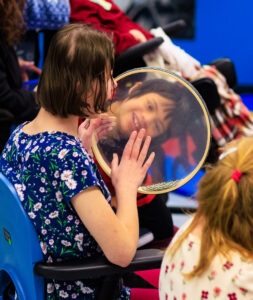
CAP music therapy students at Neptune Beach Elementary exploring instruments | Photo by Toni Smailagic of Cre8Jax
The program utilizes a range of music therapy exercises, like songwriting, instrumental play, therapeutic listening, group discussion and roleplay to practice interpersonal skills. These sessions directly target workplace attributes like communication, collaboration and problem-solving.
“The participants are able to practice various interpersonal skills that will benefit them not only in the music therapy groups, but also in their job/volunteer positions,” said Brittany Harmon, M.M., MT-BC, CAP Teaching Artist Fellow in Music Therapy. “The site director has shared how she uses the songs we’ve created and/or role-played in sessions to remind the participants of steps associated with tasks they may do outside of music therapy.”
Specific measurable gains highlight the program’s effectiveness. For instance, 90% of participants improved in at least two targeted areas, such as remaining focused despite distractions and sequencing steps involved in a work task.
Additionally, Harmon observed some other benefits: “Though I haven’t measured it, I’ve noticed an increase in empathy, especially when there are disagreements.”
The program also fosters confidence and independence. “One of the participants struggled in terms of confidence during the sessions. He often looked down when talking to others and he would require a lot of prompting to contribute,” Harmon recalled. “As the sessions progressed, the number of prompts decreased. He also looked up more readily when talking to others.”
Thanks to these skills they’re practicing with music therapy, students are better prepared for a more confident and independent transition into the workforce.
This article originally appeared in CAP’s 2024-2025 Gratitude Report, our annual publication detailing the wide-ranging impacts that, through our generous donors, CAP programs have in the Northeast Florida community. Read the report online here or request a printed copy of the Gratitude Report.
Learn more about CAP’s programs for children and young adults of all abilities by visiting our Programs page.