Sammi with some of her students at Neptune Beach Elementary | Photo by Toni Smailagic, Cre8Jax
by Sammi Acconcio, MT-BC, Board-Certified Music Therapist
As a music therapist, one of the most common questions I hear is “How can I use music to regulate my child/student’s emotions?”
Music is a natural, powerful tool for emotional regulation, communication and connection, especially in children with disabilities. Here are some simple strategies to support your child right where they are.
The “Iso-Principle”: Meeting Them Where They Are

Photo by Toni Smailagic, Cre8Jax
One of the most important concepts I have learned as a music therapist is the iso-principle. This simply means we start by matching the music to a student’s current emotional state, and then gradually use music to guide them toward a more regulated state.
For example, if a student is feeling energetic, dysregulated or overwhelmed, we might begin with fast, loud and rhythmic music. We then intentionally and gradually shift the music to be softer, slower and more structured. This attunement helps the student feel understood and supported as we assist the transition to a calmer emotional state.
If your child struggles with dysregulation, the iso-principle can be used at home as well as in the classroom to return to a state of calm.
More Music Therapy Activities for Emotional Regulation
Here are a few easy and effective music-based strategies you can use with your child at home:
 Groove to the Beat
Notice your child’s mood. Are they fidgeting? Do they seem overwhelmed? Are they energetic? Start by joining them. Model their movements by tapping to their rhythm, bouncing with them or playing upbeat music that reflects their energy.
After a few minutes, begin to slow your rhythm. Lower the volume and simplify the beat. This gradual shift helps their brain and body follow your lead toward regulation.
Instrument Play and Stop
Use simple instruments (even a pot or pan and a wooden spoon will do) to create a “start” and “stop” instrument playing game!
Model “playing” and “stopping,” similar to how you might play a game of musical chairs. You can even use recorded music and pause the music to increase receptive listening skills. Incorporate visual cues, such as big arm movements or a raised hand, to indicate “stop” if your child benefits from that extra visual or sensory input.
In addition to helping emotional regulation by increasing body awareness and validating emotional responses, this activity also builds impulse control and attention skills.
Rainbows All Around
Create a simple song using the different colors of the rainbow. For example: “I see rainbows all around me, I see the colors in this room. Let’s find the color red.” Encourage your child to look around the room and find a red item. Then repeat for all of the colors of the rainbow.
This activity encourages engagement, attention and opportunities for your child to respond in their own way. You can pause to give them space to look around the room to find the color you presented.
Sensory Sound Breaks
Some children need calming sensory input while others seek more energizing experiences. Use music to support each of these needs:
- For calming: Soft humming, slow guitar or piano music, gentle rocking or wrapping in a favorite blanket while listening.
- For energizing: Rhythmic drumming, upbeat songs, marching or dancing with strong beats.
Musical Choice-Making
Offer two simple musical choices. “Do you want a drum or a shaker?” or “Do you want to hear a fast or slow song?” Use physical items or visuals to encourage your child to point to their preference if words are not an option. Allowing your child to make a choice between two presented options builds autonomy and communication.
You’re the Key
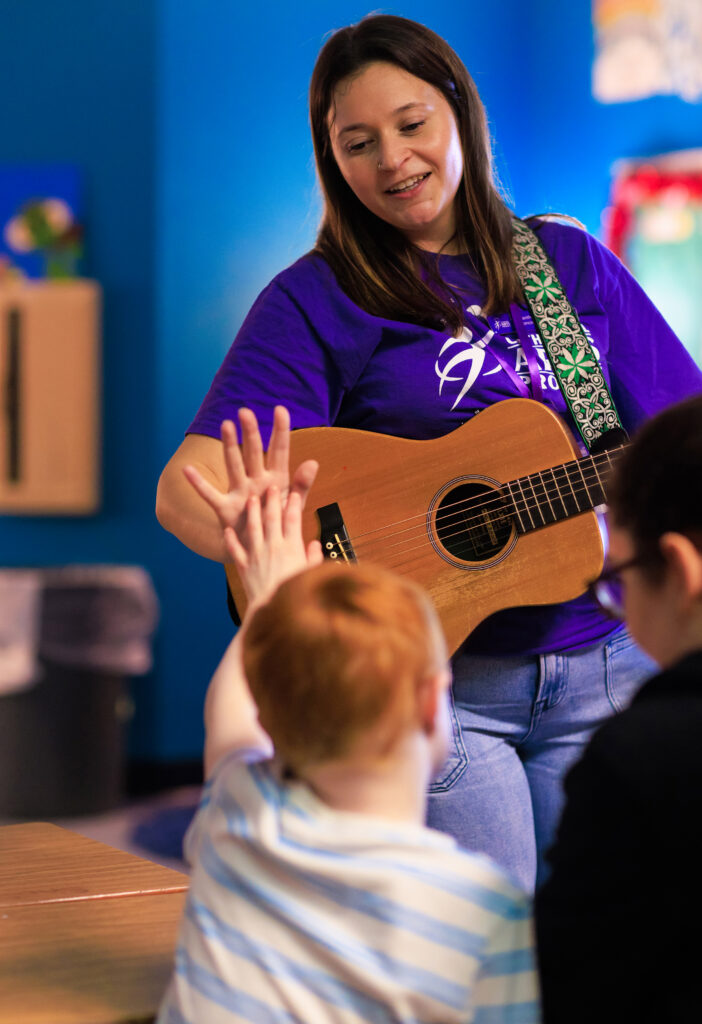
Photo by Toni Smailagic, Cre8Jax
At the heart of all of these activities is connection. You don’t need perfect pitch or formal training. Your presence, your willingness to join your child in their world and your responsiveness are what matter most.
By meeting your child where they are emotionally and using music to gently guide them, you are creating moments of trust, regulation and joy that extend far beyond the music itself.
This story is part of a series of articles featuring CAP Teaching Artist Fellows. They’ll share monthly insights from their years of experience in arts education, personal stories that impacted their careers as artists and educators, and ideas for families to incorporate more creativity into their everyday lives.
To be notified when the next story is live, sign up for our email list today.